Midlands summers generate severe social wasp activity across Richland County. In established historic communities like Shandon, Earlewood, and Cottontown, older architectural soffits, unsealed lath-and-plaster fascia,…
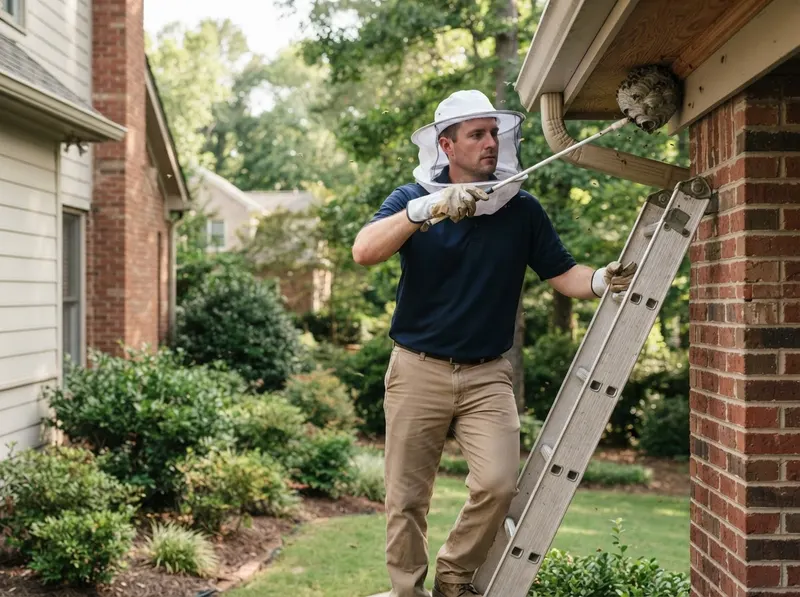
Midlands summers generate severe social wasp activity across Richland County. In established historic communities like Shandon, Earlewood, and Cottontown, older architectural soffits, unsealed lath-and-plaster fascia, and deep wraparound porches offer prime harborages for paper wasps and yellow jackets. Properties bordering dense tree canopies near Riverbanks Zoo & Garden or the University of South Carolina Horseshoe face persistent aerial colonization from bald-faced hornets. RiverCrest Bug Control approaches stinging insect management through species-specific eradication rather than indiscriminate aerosol spraying. Technicians utilize botanical and synthetic microencapsulated dusts that adhere to adult workers, transferring active ingredients into the brood core according to safety guidelines established by the Clemson University Department of Pesticide Regulation and federal oversight via the EPA Office of Pesticide Programs.
Subterranean colonies and wall-void infestations present distinct structural hazards compared to exposed exterior hives. In neighborhoods such as Rosewood, Olympia, and Elmwood Park, German yellow jackets frequently exploit weeping brick weep screeds, crawlspace vents, and foundation gaps, establishing nests containing 1,500 to 4,000 active stingers by late August. Applying store-bought expanding foam or aerosol sprays into entry holes often forces disoriented wasps into living areas through electrical outlets or baseboards. RiverCrest Bug Control leverages non-repellent formulations and micro-injection tools aligned with guidelines from the National Pest Management Association to penetrate structural voids without dispersing agitated colonies throughout home interiors.
Precision home defense balances human health protection against natural pollinator conservation. Technicians verify target species before deploying intervention measures, abiding by ecological principles established by the Entomological Society of America. True honey bee populations require careful conservation and are left intact for relocation in accordance with the South Carolina State Beekeepers Association. For defensive species like European hornets nesting along chimney flues in Forest Acres or Old Shandon, specialized pole-delivery dusters deliver focused pyrethroid treatments directly into the comb, while personal protective equipment compliant with OSHA Worker Safety Standards ensures full operator and client containment throughout the physical extraction sequence.
Long-term protection requires physical exclusion following chemical neutralization. After vacuum extraction and mechanical detachment of the comb, RiverCrest Bug Control scrapes away attachment pedicles and treats mounting surfaces with enzymatic odor mitigators. This eliminates lingering queen aggregation pheromones, which otherwise signal viable nesting terrain to fertilizing queens seeking overwintering shelter near the Congaree River basin. In accordance with building envelope moisture and pest-proofing principles outlined by the National Association of Home Builders and local building standards at the State of South Carolina Official Portal, structural access voids are sealed using copper wire mesh, silicone elastomeric sealants, or galvanized hardware cloth. For additional property defense strategies, homeowners can reference safety guidance published by the CDC NIOSH Insect Hazards Division or review environmental protection best practices through the South Carolina Department of Health and Environmental Control.
Every job gets a firm, written price after a free on-site visit.
Tell us about your stinging insect & wasp colony removal job in columbia and we'll send a clear, written quote, usually the same day.
 RiverCrest Bug Control